
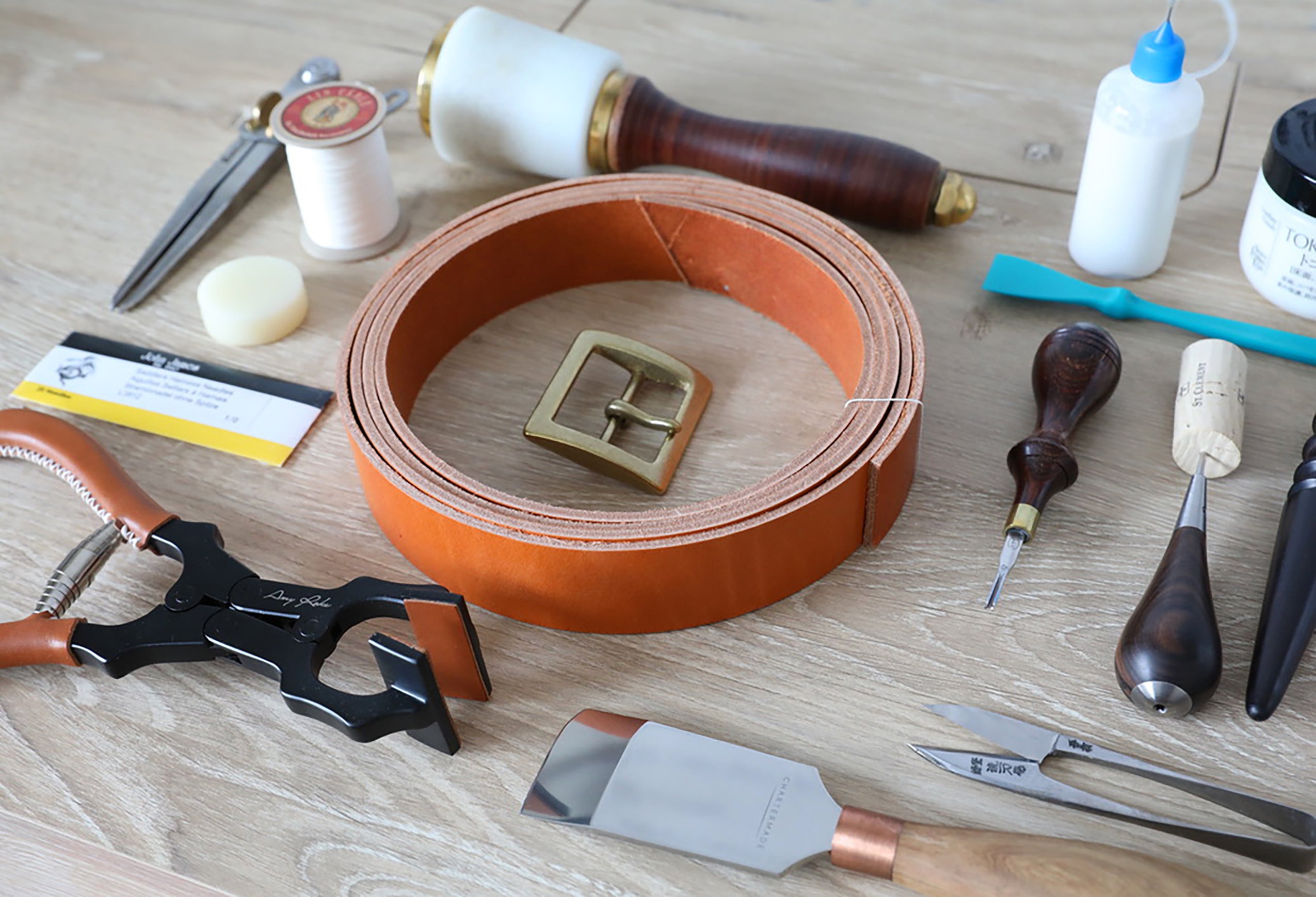
New Arrivals
Premium leathers, innovative tools, and fresh supplies
designed to make your craft easier.
Deal Zone
Limited runs, discontinued hides, and special markdowns.
Grab them before they’re gone.
Staff Picks for Beginners
Our team's favorites to have on the workbench.
🇫🇷 Alran
🇮🇹 Badalassi Carlo
🇮🇹 Conceria Walpier
🇮🇹 La Bretagna
🇫🇷 Du Puy
🇫🇷 Haas
🇮🇹 Maryam
🇮🇹 Rocado
🇯🇵 Shinki
🇯🇵 Ogawa
🇺🇸 Seidel
... and More
Cowhide
Cowhide (Calf)
Bison/Buffalo
Lamb
Goat
Horsehide
Snake
Shark/Fish
Lizard
Kangaroo
Ostrich
Alligator/Croc
Belts
Wallets
Totes/Handbags
Watch Straps/Bracelets
Shoemaking
Holsters/Sheaths
Armor
Jacket/Clothing
Mauls & Hammers
Pricking Irons
Awls
Edge Bevelers
Edge Creasers & Groovers
Punches
Burnish & Edge Paint
Stamps
Hardware Setters

“Edge finishing is quiet craftsmanship — most people don’t notice it, but they feel it.”
- Pelican Pete


Peter’s Leather Journey started with the simple joy of making something with his hands. In 2017, that meant small projects — keychains, wallets, anything that let him cut clean lines, set hardware, and end the day with a finished piece on the table. That feeling stuck. What began as curiosity slowly turned into a side business built around patience, intention, and a deep appreciation for the process. Before leather, Peter wanted to be an illustrator. He’s always loved taking an idea from his mind and making it real, and leathercraft became another way to explore that creativity. Even during a year of travel without a workbench, the craft never left him — studying bags on subways, wondering how they were made, and imagining how he’d approach them when he got back. Today, Peter intentionally keeps his work low-volume so the joy of crafting never gets lost, creating pieces that balance durability with restraint — rugged and capable, yet refined enough to live anywhere.
“Elevated ruggedness —
modern designs with materials that last.”
When Peter returned to making, he didn’t have a shop — just a dinner table and a cutting board. That didn’t stop him. Repetition turned into confidence, small improvements added up, and methods that once worked eventually gave way to better ones. Over time, he learned that the work becomes a reflection of you — how you solve problems, how you respond to mistakes, and how willing you are to rethink your process as your skills grow. Today, Peter intentionally keeps his work low-volume so the joy of crafting never gets lost. He focuses on clean construction, thoughtful design, and meticulous finishing — especially well-burnished edges. Every piece is hand-stitched, hand-finished, and built to last. One of his proudest projects is a set of custom cardholders made for a groom and his groomsmen, each stamped with initials — simple, personal, and meaningful.
Today, Peter intentionally keeps his work low-volume so the joy of crafting never gets lost. He focuses on clean construction, thoughtful design, and meticulous finishing — especially well-burnished edges. Every piece is hand-stitched, hand-finished, and built to last. One of his proudest projects is a set of custom cardholders made for a groom and his groomsmen, each stamped with initials — simple, personal, and meaningful.
For Peter, leathercraft is time well spent. It’s a creative outlet, a challenge, and a way to make something lasting in a world that moves fast. Knowing his work has found homes around the world — quietly becoming part of someone’s everyday life — is what keeps him coming back to the bench.


Subheading
Image with text heading
Give customers details about the hero image or content on the template.
The Maker Q&A
What project are you most proud of?

This set of cardholders. It was for a groom and his groomsmen, and each wallet had initials stamped for its intended owner. It was an honor to make these for such a special occasion and couldn’t be happier with how they came out.
What’s the biggest lesson you’ve learned?

Once you do it enough – leatherworking becomes a pretty clear reflection of you.
Ultimately, you’ll end up confronting a process / method that did exactly what you needed initially and became limiting you became better. Think long about how you want to improve that process, because it might be the next ceiling you hit. Confidence comes from going through the motions, internalizing steps, implementing small improvements – and a couple months down the line you’re beyond where you thought possible. And then you can really think big.
What’s your favorite tool on the workbench?

Sharp knives are safe knives. And when you cut a lot, you always want something sharp. I use a knife like this (Ingenuity w/ snap-off blades). Once the blade shows any bit of dulling / resistance, you snap it off and get a brand-new blade, ready for the next cut. It keeps things moving, keeps me safe, and makes the process of creating more enjoyable. In terms of value, I don’t think there’s anything better.
Featured Work


Want to check out more of Peter's work?
- Choosing a selection results in a full page refresh.
!